
By: Jewel Dickerman
As the year ends, millions of people across the United States and around the world gather to celebrate Kwanzaa, a seven-day holiday that honors African heritage, community, and culture. Created in 1966 by Dr. Maulana Karenga, Kwanzaa is a time for reflection, pride, and togetherness.
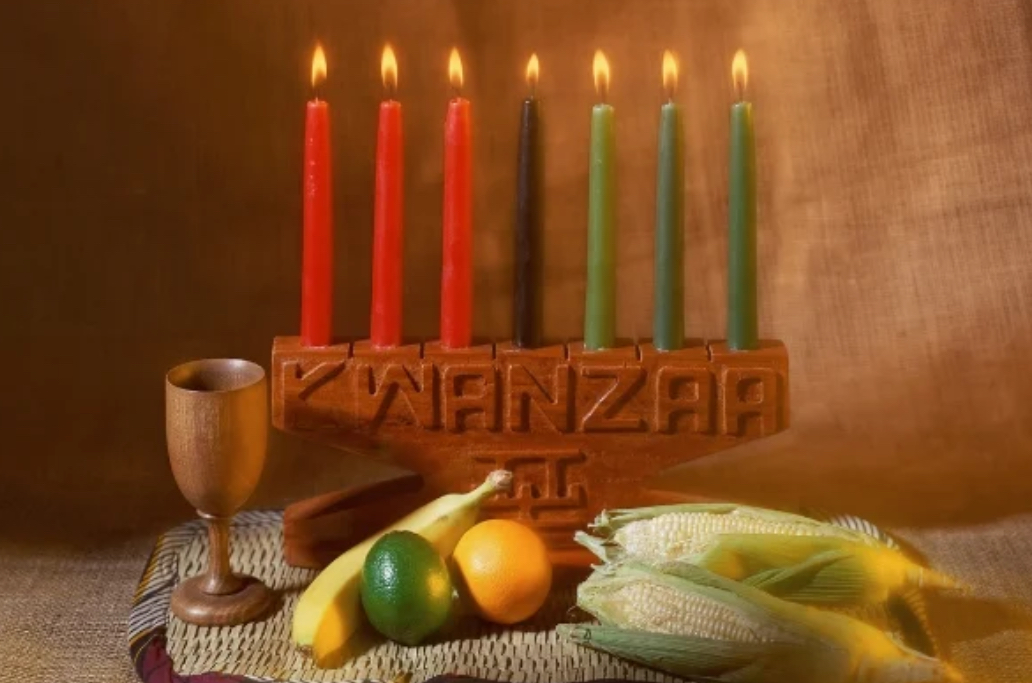
Celebrated from December 26 to January 1, Kwanzaa is built around seven principles, known as the Nguzo Saba: Unity (Umoja), Self-Determination (Kujichagulia), Collective Work and Responsibility (Ujima), Cooperative Economics (Ujamaa), Purpose (Nia), Creativity (Kuumba), and Faith (Imani). Each day, families focus on one principle—lighting a candle on the kinara, a special candleholder with three red candles, three green candles, and one black candle in the center.
The colors of Kwanzaa have deep meaning black represents the people, red stands for their struggle, and green symbolizes hope and the future. During the week, families come together to share meals, exchange handmade gifts, tell stories, and celebrate African music and art.
Fun fact: The name “Kwanzaa” comes from the Swahili phrase “matunda ya kwanza,” which means “first fruits,” symbolizing the holiday’s roots in African harvest festivals. And unlike many other winter holidays, Kwanzaa isn’t religious—it’s a cultural celebration that anyone can appreciate.
Kwanzaa reminds everyone to stay connected to their roots, uplift their communities, and move forward with unity and purpose—a beautiful way to end the year and begin anew.