Credits: Britannica
By Kiana Madrigal
You hear a knock on your front door and before you can answer it, townspeople barge in accusing you of being caught flying during the night hours. Ridiculous, right? Not in 1692 it wasn’t, and you had better find an alibi quick or else you will be hung by tomorrow morning. Welcome to the Salem Witch Trials.
To set the scene, fear had been spreading through Europe for centuries, as thousands of people were accused of practicing witchcraft. These accusations were often based on rumors and personal disputes. The hunts were to identify worshippers of the Devil, who would exchange their souls in return for supernatural powers to bring harm to others and even shape shift into other forms.
Across the Atlantic, in the late 1600s, a small Massachusetts community was about to become the center of one of the most infamous witch hunts in American history. At the time, there were two distinct communities in the Massachusetts Bay area: Salem Town, a growing center of trade, and Salem Village, a rural farming community located about ten miles away. Salem Village had a population of 500 where religious beliefs in Puritanism were woven deeply into the fabric of the community and tensions simmering beneath the surface.
Beneath the quiet appearance of the village, social divides over land, wealth, religion, and local leadership plagued the community. Two prominent families, the Porters and the Putnams had especially deep conflict. The arrival of the villages’ first ordained minister, Samuel Parris, only added to the tension, and belief that he was influenced by the Putnams. As Parris was known for his strict religious beliefs and grueling rulings, he became a controversial figure supported by some villagers and opposed by others. In a community already divided by suspicion and conflict, fear would soon find a new target.
It all started when the minister’s daughter and niece, Elizabeth Parris and Abigail Williams started having “fits,” where they would scream, throw objects, made odd noises, and contorted their bodies into unnatural positions.
It is important to mention that the Parris household was home to two enslaved people, and one would soon become central to the unfolding events, Tituba. Enslaved by Reverend Samuel Parris in Barbados, her exact origins remain debated, but she is often described as having Indigenous South American or Caribbean roots. Her responsibilities were to help Parris’ wife care for the girls and keep the house running smoothly.
The family called a local doctor to examine the girls, William Grigs, in which he suggested their symptoms were the result of supernatural forces. Then, just when the family thought they might be dealing with an isolated incident, another girl joined the growing mystery. About a month later, the girls’ friend, Ann Putnam Jr., began experiencing similar fits.
With fear and suspicion beginning to take hold, Tituba was encouraged to make a “witch cake,” made out of the girl’s urine and rye meal that was fed to the dog in an attempt to figure out who was the source of their afflictions. The ritual gave no answers and instead infuriated Reverend Parris. The search for an explanation was about to take a much darker turn.
Speculation, fear, pressure. The girls blamed three women for afflicting them. Tituba, an enslaved woman; Sarah Good, a homeless beggar; and Sarah Osborne, an impoverished woman. All three women were interrogated for several days, with accusations growing more serious. Good and Osborne claimed innocence. Tituba did not.
“The devil came to me and bid me serve him,” she claimed. Tituba described a frightening scene of black dogs, red cats, yellow birds, and a “tall man with white hair” who demanded that she sign his book. Her confession did not end there. Not only did she admit to signing his book but claimed there were other witches conspiring to destroy the Puritans. What began as a desperate search for answers had become something far more serious. Tituba’s confessions confirmed the village’s unspoken fears. The possibility of witchcraft no longer was confined to three women.
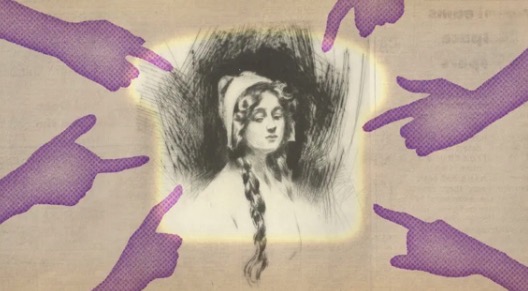
As the spread of hysteria seized Salem Village, streams of accusations followed over the next couple of months. The “fits” that Abigail and Elizabeth experienced seemed to spread around the community including Ann Putnam’s mom, her cousin, and their servant. Dozens of people, not just from Salem, but from other villages were brought in for questioning. Even outstanding members of society who attended church every Sunday were accused, worsening the paranoia; if even faithful people can be accused, anyone can. And suspiciously, many of the accused were enemies of the Putnams. Governor Willian Phips, in response, ordered the establishment of a Special Court of Oyer and Terminer, which would soon decide the fates of hundreds of girls.
As the trials began, the accused were left to defend themselves without legal counsel, but the court’s most troubling form of evidence was not physical proof. It was something very difficult to challenge— spectral evidence. The accusers could claim that spirits or specters had appeared before them, attacking them through bites and pinches. They believed Satan had taken the accused form to carry out his wicked deeds. Inside the courtroom, the girls and young women who have accused them writhed and whimpered, confirming to believers of spectral evidence that they were in presence of evil. How could the alleged witches possibly prove their innocence against evidence that relied on invisible spirits?
As the proceedings continued, though, a pattern made itself present: those who confessed to witchcraft, especially those who named others as accomplices, could escape execution. Under Puritan beliefs, God would ultimately punish those who had served the Devil. Refusing to confess proved to earn a far harsher fate. Some people recognized the injustice unfolding before them, but speaking out would mean drawing suspicion and risk being the next “witch.” Silence became a form of self-preservation.
On June 2, 1692, the court reached its first guilty verdict— Bridget Bishop. Bridget was an older woman who was known for gossip and promiscuity. Despite claiming innocence, eight days later she would find herself hung at what was later called Gallows Hill in Salem Village. This marked the beginning of a series of executions that would leave the community shaken. On July 19, five more convicted women were hanged.
As the summer continued, the accusations reached even further than just girls. George Burroughs, the former minister of Salem Village, was accused of being the ringleader of the witches. He was convicted and sentenced to death. As he stood on the gallows alongside four others, he recited the Lord’s Prayer perfectly. At the time, it was believed a witch is incapable of doing so, and his recitation raised doubts among the spectators about his conviction. In the end, it did not save him.
By September, the executions showed no sign of stopping. Eight more people were hanged, including a woman named Martha Corey. Her husband, Giles Corey, was also accused of witchcraft. He refused to enter a plea, so the court subjected him to a punishment called, forte et dure, in which heavy stones were placed upon him to force him to plea. Giles endured the punishment for two grueling days before he died. With each passing month, more lives were lost, and the hysteria surrounding Salem continued to grow like weeds in a garden.
Fall arrived and it seemed as the leaves were falling, so was the trial’s grip on Salem. A prominent Puritan minister and president of Harvard College, Increase Mather, spoke out against the use of spectral evidence. He argued that accusations based on visions were too unreliable to determine a person’s guilt. After months of relying on these claims, the very evidence that had helped fuel the hysteria was being challenged. Late in October, Governor William Phips ordered the Court of Oyer and Terminer to stop its proceedings, with the accusations reaching his own household as his wife was reported to have a connection with witchcraft. In its place, Phips established a new Superior Court of Judicature, which was instructed to not accept spectral evidence. Without this form of testimony, the prosecution of the accused became far more difficult.
The trials resumed in January and February of 1693, but the results were drastically different. Of the fifty-six people indicted, only three were convicted. By May, Phips had pardoned those convicted and the remaining people in custody, finally bringing the Salem Witch Trials to an end.
The damage was done, though. Nineteen people were hanged. Five died in custody. One was pressed to death. What had begun with mysterious fits and desperate attempts to explain them, led Salem to spiral into a tragedy. The nightmare was finally over, but the lives lost—the stain that tainted Salem could never be washed out.